How to Apply Highlighter (So You Glow, Not Sparkle)
Short answer: Highlighter works when it copies what real light does: it catches the high points of your face, in a thin layer, with a shade close to your own skin. Apply a small amount to the tops of the cheekbones, the brow bone, a touch down the centre of the nose and the cupid’s bow — then blend until there is no visible edge. If people can see stripes or glitter, there is too much product or the wrong formula.
Where highlighter goes (and where it does not)
Light naturally hits the parts of the face that stick out. Copy that map:
- Tops of the cheekbones — the main spot, swept up toward the temple.
- Brow bone — a soft touch under the arch of the brow lifts the eye area.
- Centre of the nose — a thin line or a small dab on the tip; keep it subtle or the nose looks oily.
- Cupid’s bow — a tiny dot above the centre of the top lip makes lips look fuller.
- Inner corners of the eyes — brightens tired eyes (optional, and lovely for evenings).
Restraint is the whole secret. Skip the forehead and chin unless you want a full glam look — those areas get shiny on their own, and highlighter there reads as grease, not glow.
Cream, liquid or powder — which one?
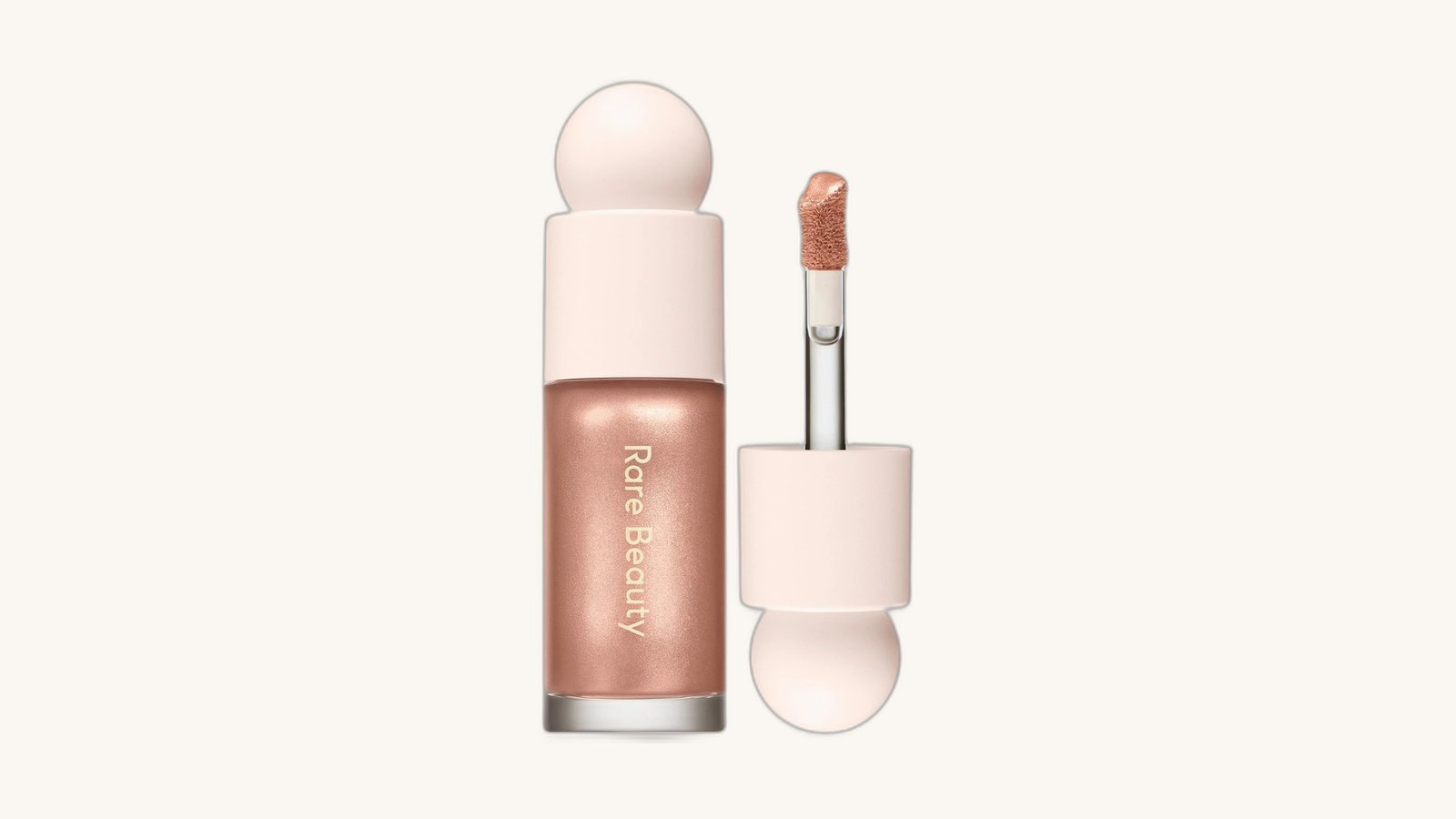
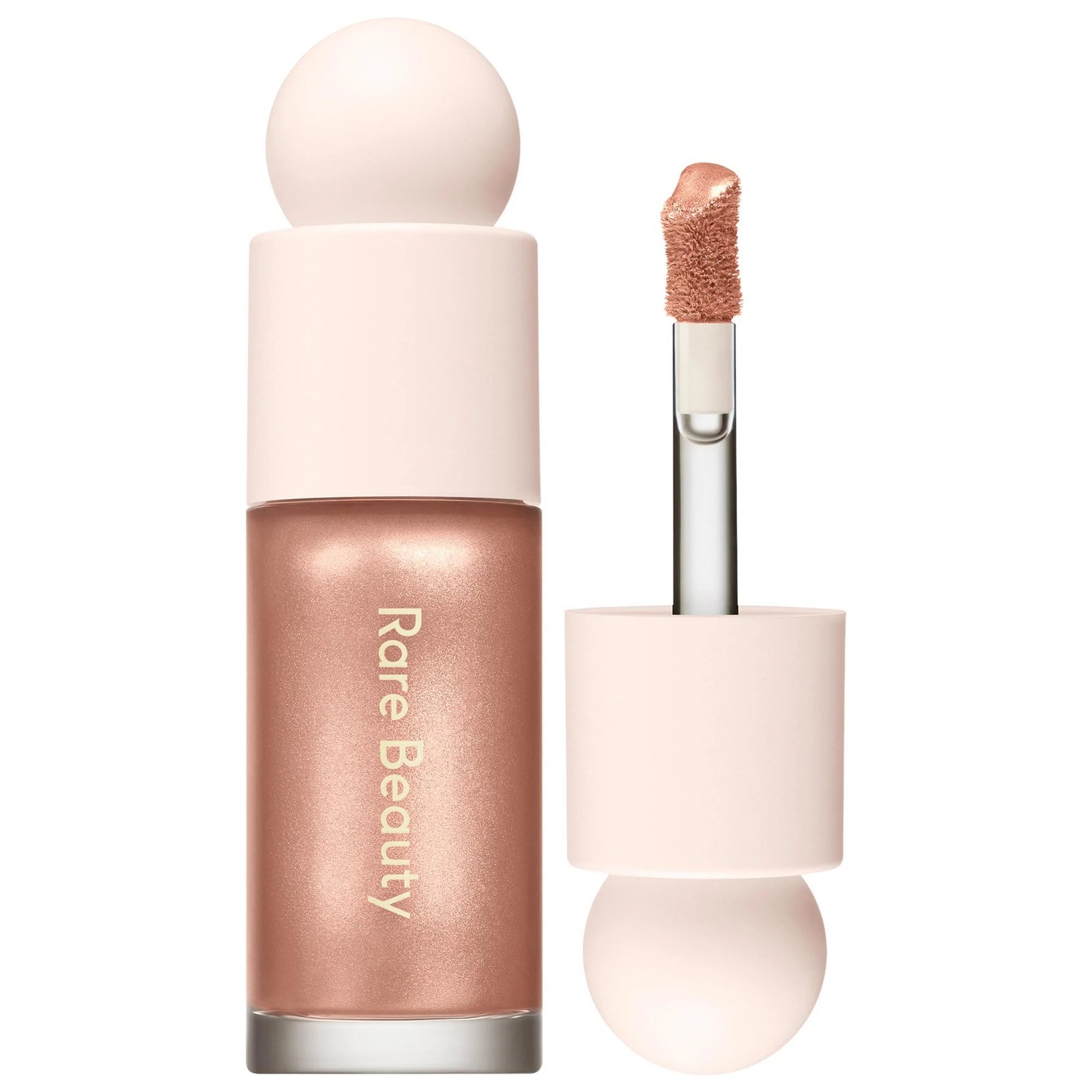
- Liquid highlighter (like Rare Beauty Positive Light Liquid Luminizer) gives the most skin-like finish. Dab it on with fingers or a sponge and it melts in — the best choice for a natural glow and for dry or mature skin.
- Cream highlighter in a stick or pot is easy to control and great for targeted spots like the cupid’s bow. Pat it on; do not drag.
- Powder highlighter sits best on oily skin and over powder foundation, and gives the strongest shine — which also means it shows texture and pores the most. Use a light hand and a fluffy brush.
Match the formula to your base: liquid and cream over liquid foundation, powder over powder. Mixing the order (powder under cream, for example) is how makeup turns patchy.
Choose the shade by your skin tone
The glow should look like your skin, lit well — not like a different colour sitting on top.
- Fair skin: pearl and soft champagne shades. Avoid anything dark or very golden; it will look like a stripe.
- Medium skin: champagne gold and warm peach tones blend in beautifully.
- Deep skin: rich gold and copper shades give a true glow. Icy white highlighters can look grey or ashy — skip them.
- Undertone check: if your skin is cool-toned, pinky-pearl shades flatter; warm-toned skin glows best in golden shades.
How to apply it (step by step)
- Finish your foundation and concealer first. Highlighter goes near the end, before or after blush.
- Use far less than you think — start with a pin-head amount of liquid or one light brush-load of powder.
- Place it on the cheekbones first, blending upward and outward with a damp sponge, brush or clean fingers until the edge disappears.
- Add the small spots — brow bone, nose, cupid’s bow — one at a time, checking in normal daylight if you can.
- Look at your face from the side. You should see light, not a line. If you see a stripe, blend more; if you see sparkle, remove some with a clean sponge.
Common mistakes that make it look sparkly
- Too much product. The number one cause. Glow is built in thin layers, never one thick one.
- Chunky glitter formulas. Fine shimmer looks like skin; visible glitter particles look like a party costume. Check the product in daylight before buying.
- Wrong places. Highlighter on pores, spots or fine lines makes them more visible, not less. Keep it on smooth, high areas.
- Shade too light for your skin. A pale stripe on medium or deep skin is the classic giveaway.
- No blending. An unblended edge is what separates “sparkle” from “glow” more than the product itself.
Frequently asked questions
Should highlighter go before or after blush?
Either can work. A natural order is blush first, then highlighter just above it on the cheekbone. If you mix a drop of liquid highlighter into foundation, that goes on first, all over, for an overall glow.
Can I wear highlighter if I have oily skin?
Yes — choose a powder formula, keep it only on the cheekbones and brow bone, and skip the nose and forehead, which shine on their own.
Does highlighter make wrinkles more visible?
Shimmery products can settle into lines, especially powder formulas under the eyes. If that is a concern, use a liquid formula, keep it away from crow’s-feet, and apply the thinnest possible layer.
What is the difference between highlighter and illuminator?
They are close cousins. “Illuminator” usually means an all-over glow product mixed with foundation or worn under it; “highlighter” means a targeted product for the high points. Many products, honestly, do both jobs.