What Does Azelaic Acid Actually Do? (Explained Simply)
Short answer: Azelaic acid is a gentle, multitasking ingredient that calms inflammation, unclogs pores, reduces the bacteria behind acne, and slows down excess melanin — which is why it helps acne, rosacea redness and dark marks at the same time. It is weaker than the strongest prescription treatments but far better tolerated than most actives, which is exactly why dermatologists keep recommending it.
What azelaic acid does for your skin
1. It calms acne. Azelaic acid is antibacterial and anti-inflammatory, and it helps stop pores from clogging in the first place. It works on mild to moderate acne — spots, bumps and the redness around them — without the dryness and bleaching that benzoyl peroxide can cause (it does not bleach towels or hair).
2. It settles rosacea redness. The prescription gel (15%) is an approved rosacea treatment. It reduces the persistent redness and the small bumps of rosacea, and it does so without thinning the skin or causing the rebound flushing some treatments trigger.
3. It fades dark marks and supports melasma care. Azelaic acid slows overactive pigment cells — the ones producing too much melanin — while leaving normal skin largely alone. That makes it useful for post-acne marks, sun spots and as a supporting ingredient in melasma routines, where harsh ingredients often backfire.
Which strength do you need?
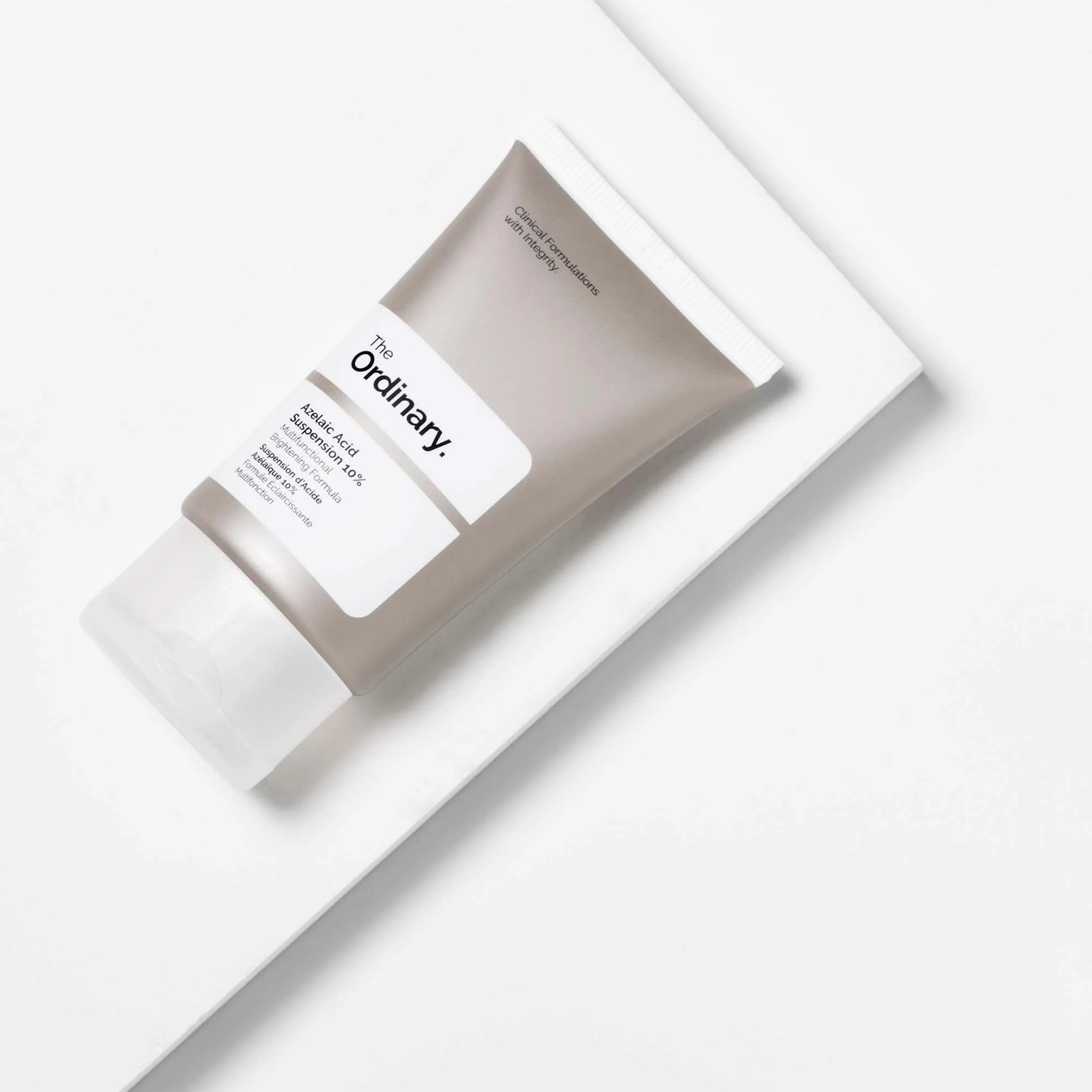
- 10% (cosmetic, over the counter) — the standard shop strength, like The Ordinary’s Azelaic Acid Suspension 10%. Good for mild acne, general redness, uneven tone and dark marks. This is where most people should start.
- 15–20% (prescription) — gels and creams prescribed for rosacea and moderate acne. Stronger and clinically tested for those conditions. If a 10% product is not enough after 3 months, this is the step to discuss with a doctor — not a stronger random product online.
How to use azelaic acid (step by step)
- Cleanse your face and pat it dry — applying to damp skin increases stinging for some people.
- Apply a pea-to-fingertip amount over the whole face, or just the affected areas.
- Follow with moisturiser. (If it stings at first, apply moisturiser before it for the first few weeks — the “sandwich” method.)
- Use once a day for the first 1–2 weeks, then twice a day if your skin is comfortable.
- In the morning, finish with sunscreen — essential if you are treating dark marks or melasma, because UV undoes the progress.
A normal warning: mild tingling or itching for the first few weeks is common and usually fades. The 10% suspension has a slightly gritty, silicone feel and can pill under makeup — apply a thin layer and let it set for a few minutes first.
What it pairs with
Azelaic acid is unusually easy-going. It layers well with niacinamide, hyaluronic acid and most moisturisers, and it is often used in the morning while retinol is used at night. Introduce it on its own first, like any active, so you can judge what it does for you.
A note on pregnancy
Azelaic acid is often considered one of the more acceptable skincare options during pregnancy, because very little of it absorbs into the body — and it is frequently the active doctors suggest when retinol and other ingredients are off the table. That said, “often considered” is not the same as “cleared for you personally”: always check with your own doctor or midwife before starting or continuing any active ingredient in pregnancy.
How long until you see results?
Redness and calmer skin can improve in about 4 weeks. Acne typically needs 6–8 weeks. Dark marks and melasma are the slowest — give it a full 12 weeks of twice-daily use before judging, and take a photo on day one, because the change is gradual.
Frequently asked questions
Is azelaic acid good for sensitive skin?
Usually, yes — it is one of the gentlest actives available and is prescribed for rosacea, a sensitive-skin condition. Start once a day, use the sandwich method if it tingles, and build up slowly.
Can I use azelaic acid with retinol?
Yes. A common routine is azelaic acid in the morning and retinol at night. Some experienced users layer both at night, but splitting them is gentler and works just as well.
Can I use it with vitamin C?
Yes — they do not conflict. Many people use vitamin C and azelaic acid in the same morning routine. If your skin is reactive, introduce them a few weeks apart so you know which one your skin likes.
Why does the 10% cream feel gritty and pill under makeup?
That is the suspension formula, not your skin. Apply less, let it absorb for 2–3 minutes before moisturiser and makeup, or use it only at night if the texture bothers you.