Do You Actually Need a Toner? (Explained Simply)
Short answer: No — toner is not an essential step, and nobody’s routine fails for lacking one. But “toner” has changed meaning: the old alcohol-heavy astringents existed to fix problems caused by old-fashioned cleansers, while modern toners are mostly watery treatment layers that hydrate, soothe or gently exfoliate. If your skin is dry, dehydrated or sensitive, a hydrating toner can genuinely help. If your routine already works, a toner is an upgrade option, not a missing requirement.
Why toner existed in the first place
Original toners solved a problem most people no longer have. Traditional soap-based cleansers left an alkaline film on skin and raised its pH, so an acidic, alcohol-based toner was used to strip the residue and “rebalance” afterwards. That is also where toner’s harsh reputation comes from — the stinging, tightening astringents aimed at oily teenage skin. Modern gentle cleansers are already pH-balanced and rinse clean, which quietly removed toner’s original job. What kept the category alive is that brands rebuilt it into something more useful.
What modern toners actually do
Today “toner” describes texture (thin and watery) more than function. There are three real types:
1. Hydrating toners. Watery layers of humectants — glycerin, hyaluronic acid, panthenol, heartleaf, rice or oat extracts. Applied to damp skin before serum, they add a layer of water that thicker products then seal in. This is the most popular modern type, driven by Korean skincare, and the one with the clearest benefit: dehydrated skin drinks them.
2. Exfoliating toners. Essentially liquid acids — glycolic, salicylic, lactic acid or PHAs — in toner form. These are treatments, not toners in the old sense; count them as your exfoliant, with the same frequency rules (a few times a week, not layered under other strong actives carelessly).
3. Soothing and “essence-toners.” Calming formulas aimed at redness and sensitivity, blurring into the essence category. Useful for reactive skin that wants hydration without heavy creams.
Who benefits, and who can skip it
Worth trying if: your skin feels tight or “thirsty” after cleansing; you layer a retinoid and want a hydration buffer; you live in a dry climate; or your moisturiser alone never feels like enough in winter. Apply hydrating toner to damp skin — that detail is most of its effect.
Skip it if: your skin is happy with cleanser, moisturiser and sunscreen. Adding a step adds cost, time and one more chance of irritation. Also skip classic alcohol-based astringent toners entirely — whatever your skin type, they solve a problem modern cleansers no longer create.
Where it goes in a routine
Cleanse → toner (on damp skin, pressed in with palms — cotton pads waste product and add friction) → serum → moisturiser → sunscreen in the morning. Pat on, do not rub dry. One layer is enough for most people; the Korean “multiple skin layers” method (repeating a hydrating toner two or three times) is a legitimate trick for very dehydrated skin before events or in harsh winters.
What Real Users Say
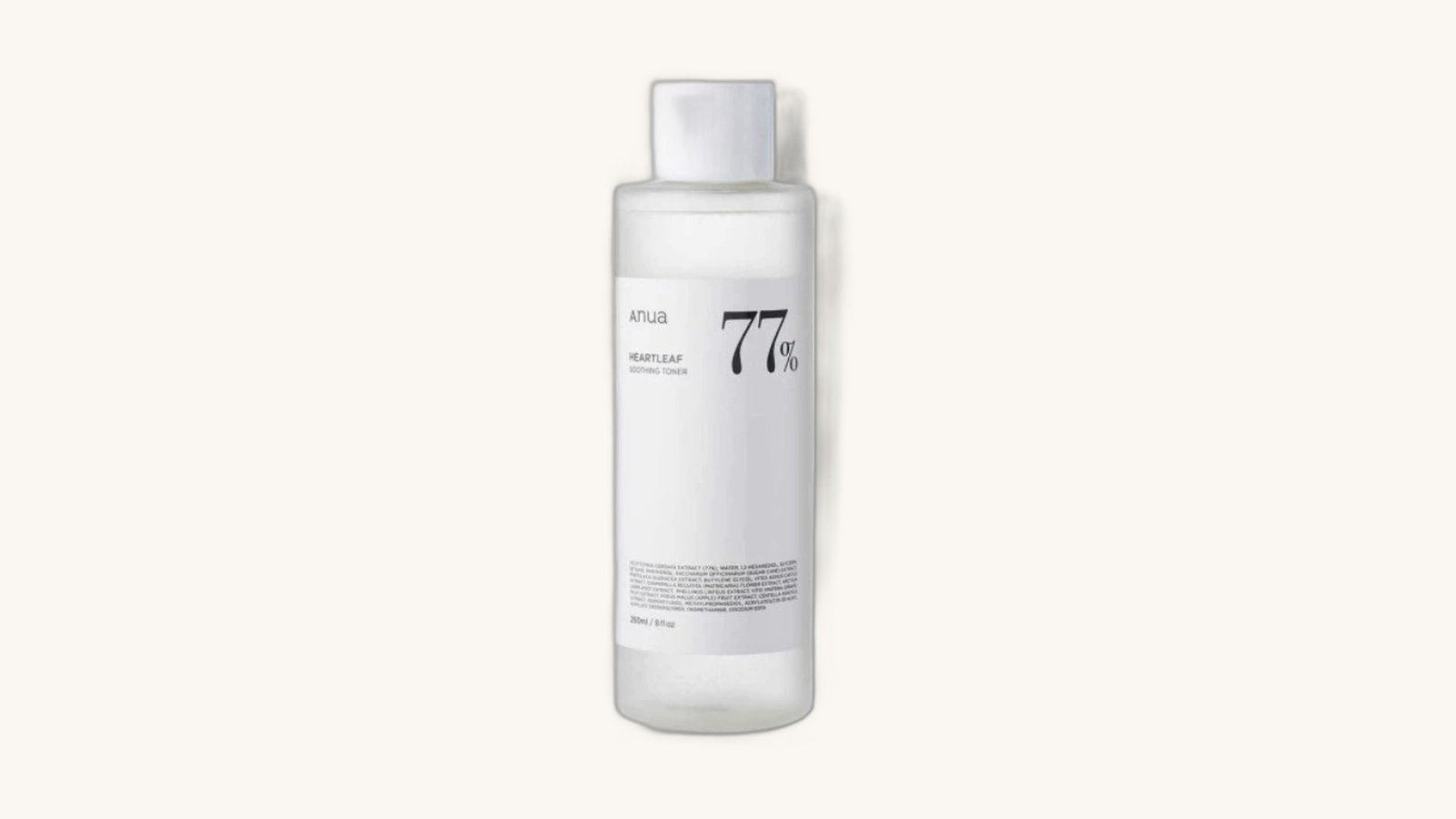
Anua’s Heartleaf 77% Soothing Toner is the modern hydrating toner most users currently argue about, and the argument is mostly about expectations. It rates around 4.5 stars across large Amazon review counts and built its following on TikTok and Reddit’s r/AsianBeauty, where users with red, reactive skin consistently say it takes the heat out of their face — the recurring praise is calming: less visible redness, skin that feels comfortable and hydrated without any heaviness, and good behaviour under makeup and over actives. Sensitive-skin users are its core fans, and many describe it as the first toner that did something noticeable for them. The complaints define its limits just as clearly: a substantial group of reviewers — especially oily-skin users expecting a transformation — call it “expensive water” and report no visible difference after a bottle, which fits what a soothing hydrator can and cannot do. Others note it needs consistent twice-daily use to show its calming effect, that the hydration alone is not enough without moisturiser over it, and that the hype set expectations no toner could meet. A small minority report breakouts or stinging despite the gentle positioning — heartleaf is a botanical, and botanicals can still disagree with individual skin.
Sources: Amazon customer ratings and reviews; Reddit threads from r/AsianBeauty and r/SkincareAddiction. Searched: “Anua Heartleaf 77 toner user reviews redness worth it”.
Frequently asked questions
Is toner the same as micellar water or essence?
No. Micellar water is a cleanser — it removes things and belongs at the cleansing step. An essence is a concentrated treatment layer, usually richer than a toner. Toners sit between: a light layer applied after cleansing, mainly to hydrate, soothe or exfoliate.
Do I need toner to balance my skin’s pH?
With a modern gentle cleanser, no — your skin returns to its natural pH on its own within a short time. This was a real job in the soap era; it is mostly a marketing echo now.
Can toner replace moisturiser?
No. Toners add water; moisturisers add the oils and occlusives that keep water in. On very oily skin in humid weather a hydrating toner plus sunscreen can feel like enough in the morning — but that is the exception, not the rule.
Should I apply toner with a cotton pad or my hands?
Hands, for hydrating and soothing toners — pads absorb a third of the product and add friction. A pad makes sense only for exfoliating toners, where it helps sweep away loosened dead skin.
How is an exfoliating toner different from an acid serum?
Mostly format and strength, not kind. Treat them identically: they are your exfoliation step. Using an acid toner daily plus an acid serum is how people over-exfoliate without realising — count the total, not the product names.